
Ride With Me
Fandom Is a Product
The best sports organizations increasingly behave like media and entertainment companies.
ArticleThe Game Isn't Enough Anymore
What 47 college football programs tell us about the future of the live sports experience
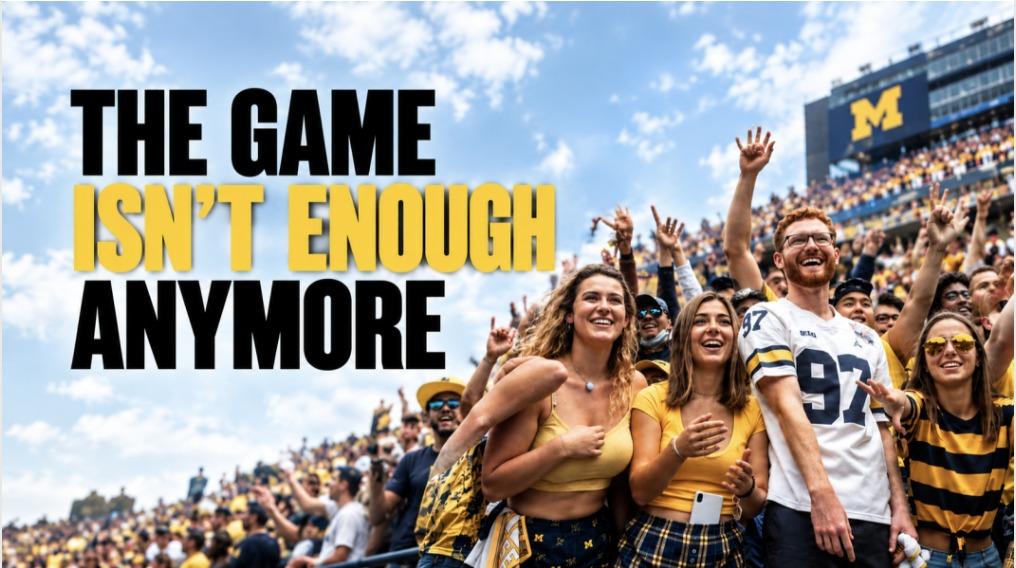
The game will always be the reason people care.
But increasingly, the game alone isn't enough to get people off their couch.
That's one of my biggest takeaways from a fascinating new study from College Town examining fan-experience changes announced by 47 college football programs for the 2026 season.
The study found schools investing in everything from parking and security to cheaper concessions, premium experiences, pregame entertainment, technology, student engagement and fan research.
I spend a lot of my time walking stadiums and arenas, assessing the fan experience from the moment someone approaches the building until the moment they leave. And one thing that work has taught me is that the biggest opportunities aren't always the most obvious ones.
A new videoboard is obvious. A major entertainment feature is obvious. But sometimes improving the experience means fixing a security line, changing the timing of a promotion, creating a reason for fans to arrive earlier or understanding why students leave at halftime.
That's why this research caught my attention.
But when you look at all of those individual changes together, I think they tell a much bigger story.
Live sports is becoming a consumer product.
And teams need to start managing it like one.
For years, we looked at other teams as the competition.
I don't think that's the right comparison anymore.
The competition is your couch.
Think about the experience of watching a game at home.
No traffic.
No parking.
No security line.
No concession line.
Your food costs a fraction of what it costs at the stadium.
Your bathroom is ten feet away.
You've got multiple screens, instant replay and every other game available at the push of a button.
And your seat is pretty comfortable.
That's a hell of a competitor.
Which makes one finding in this research particularly interesting.
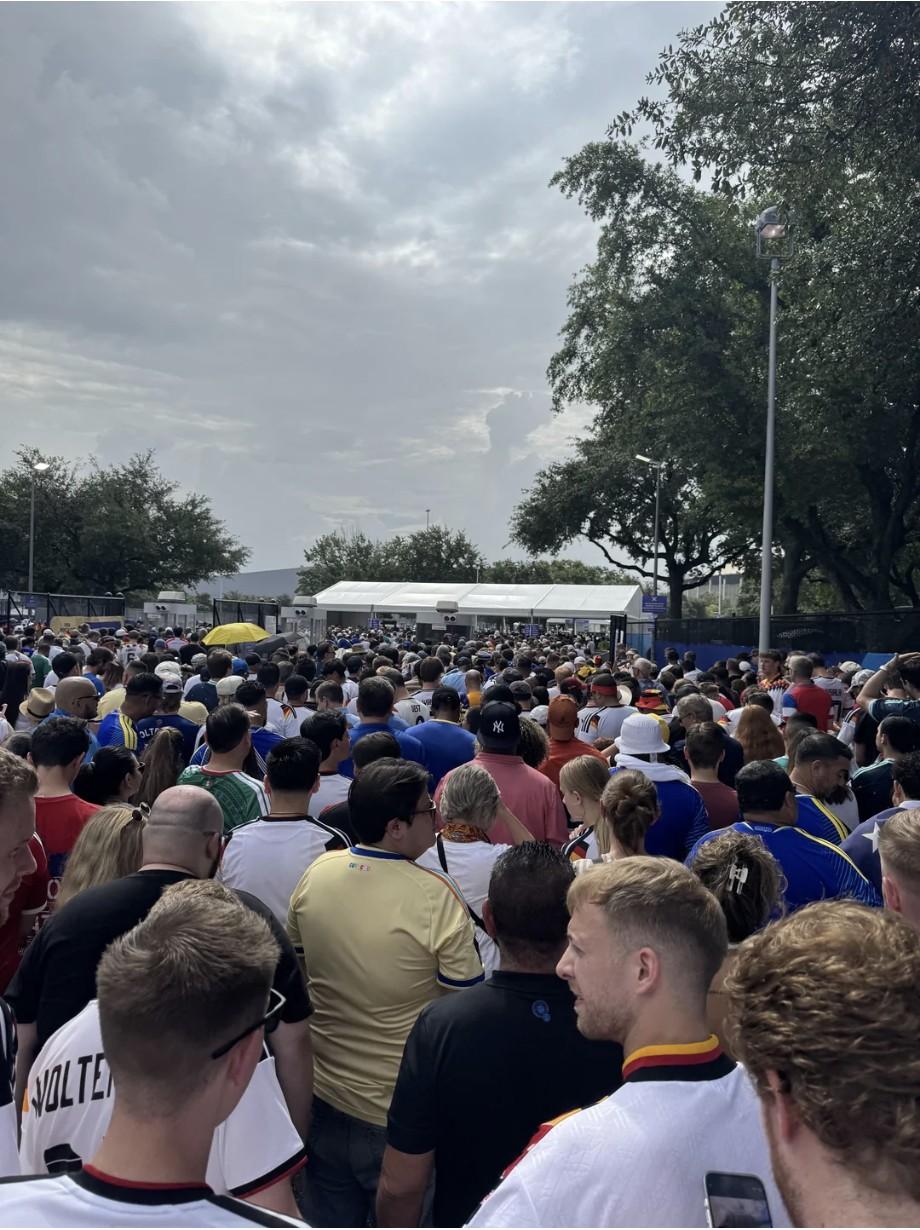
Among the 47 college football programs studied, 25 announced meaningful changes aimed at reducing friction.
Not necessarily giant videoboards or fireworks.
Parking. Entry. Security. Ticket scanning. Concessions. Restrooms. Navigation. Connectivity.
Georgia Tech announced 100 different game-day improvements, including increasing ticket-scanning capacity by 35 percent and doubling its golf-cart shuttle fleet. Indiana added 42 concession points of sale and 38 portable restrooms. Minnesota introduced screening technology designed to allow fans to enter without removing everyday objects like phones and keys.
None of those things are particularly sexy.
They're also incredibly important.
When we assess a venue, some of the most valuable observations come from simply following the same journey as the fan. Where do they stop? Where do they wait? Where do they get confused? Where does the energy disappear?
Sports organizations spend a lot of time asking, What can we add to the fan experience?
Sometimes the better question is: What can we remove from it?
Remove the line.
Remove the confusion.
Remove the traffic jam.
Remove the unnecessary interruption.
Remove the thing that makes someone say, "This is why I should have stayed home."
Before fireworks, fix friction.
Here's another mistake I think we make in sports.
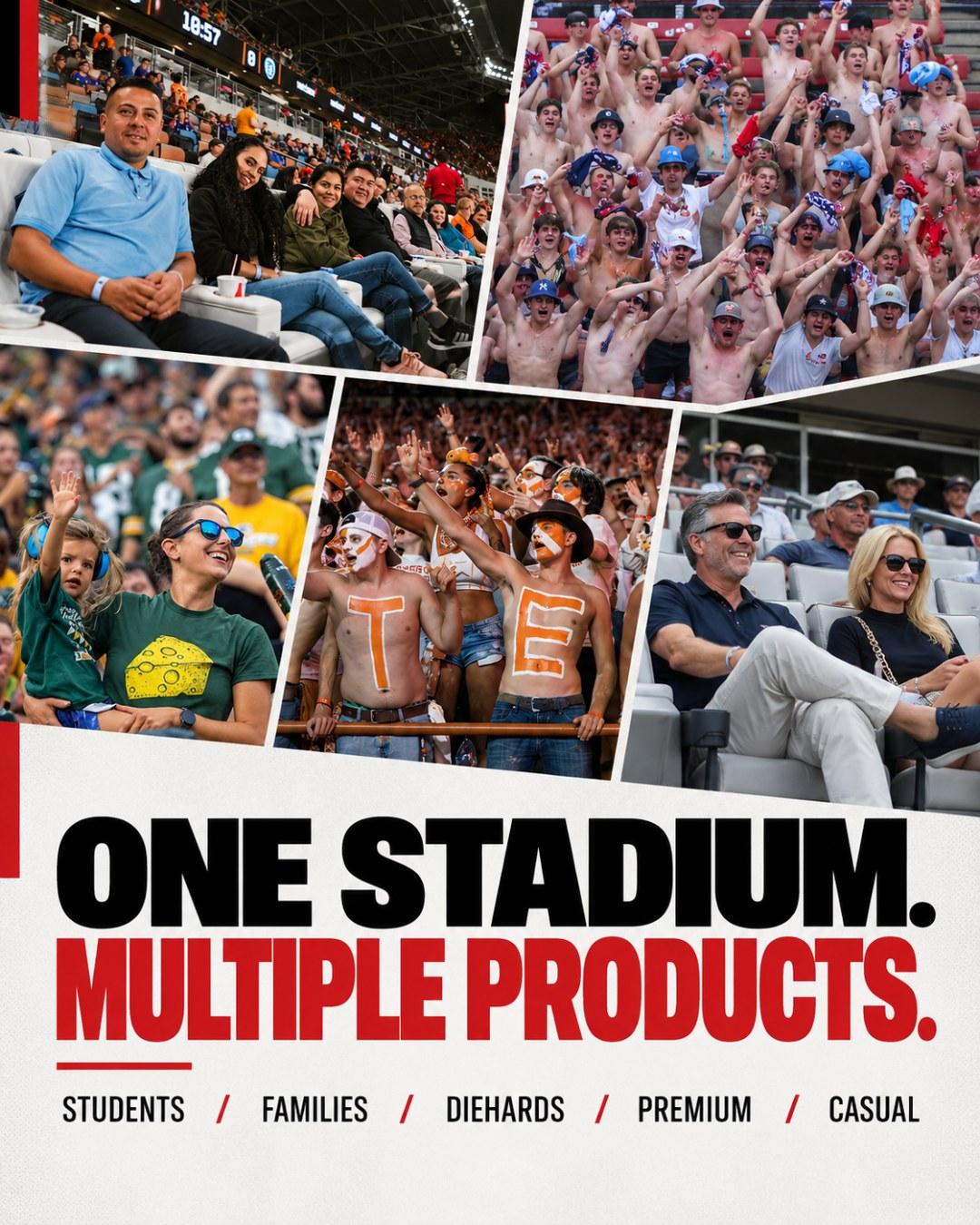
We talk about the fan experience as though everyone walking into the building wants the same thing.
They don't.
A 19-year-old student isn't looking for the same experience as a family bringing two kids to their first game.
Neither of them wants exactly what a 30-year season-ticket holder wants.
And none of those people necessarily want what your premium customer wants.
One stadium may actually contain several different products.
The College Town research found programs increasingly designing specific experiences for students, families, premium customers and general fans.
Ball State is a great example.
Families have access to a tent where parents can feed babies, recharge or simply take a break. There's stroller parking, bounce houses, face painting and a mini football field.
Students have a completely different experience. They've been moved behind the visiting bench and participate in a new band-led march into the stadium.
Same football game.
Different customer.
Different experience.
Instead of asking:
"How was our fan experience?"
We should be asking:
"How was the experience for each of our fan segments?"
That is a much more useful question.
This becomes especially interesting when you look at students.
For a long time, success was pretty simple.
Did they get a ticket?
Did they show up?
But some programs are starting to think much further down the funnel.
The progression looks something like this:
Those are five very different outcomes.
Cincinnati, for example, is giving students a 25-percent concession discount beginning in the fourth quarter. UNLV has used free halftime food as an incentive while changing its student seating experience. Syracuse has gone as far as deliberately programming its third quarter around students.
That's not attendance strategy.
That's retention strategy.
And I think there's an important lesson there for all of sports.
Presence is not engagement.
We celebrate a sellout.
But what happened after everyone entered the building?
Did they arrive early?
Did they participate?
Did they spend?
Did they stay?
Did they enjoy themselves?
Would they come back?
If game day is a product, attendance is only one KPI.
Twenty of the 47 programs in the study announced meaningful investments in pregame.
That makes sense.
Colorado has built Ralphie's Road with food trucks, a giant television, a DJ and interactive games.
Indiana has live bands, food trucks, a kids zone and a two-level bar as part of its pregame experience.
North Texas built a permanent stage that connects its pregame experience with Denton's music culture.
This isn't just about giving fans something fun to do.
Think about the business implications of getting someone to arrive an hour earlier.
That's another hour to buy food.
Another hour to buy merchandise.
Another hour to interact with sponsors.
Another hour to create memories.
And potentially fewer people trying to enter the stadium at exactly the same time.
We shouldn't be thinking about a three-hour football game.
We should be thinking about a six-hour customer journey.
That's one of the lenses we use when looking at a live experience. The show doesn't begin when the ball is kicked, tipped or thrown. The customer's experience began long before that.
Where does the experience start?
What happens when someone arrives?
What makes them want to come early?
What happens after the game?
And how do we communicate with them between games?
The actual game is the centerpiece.
But it's only one part of the customer journey.
This may be the trend that fascinates me most from a business perspective.
For decades, sports has largely monetized premium by selling a better place to watch the game.
Better seat.
Better view.
Suite.
Club.
Hospitality.
That's still enormously valuable.
But teams are beginning to monetize something else:
Access.
Indiana sells team runout and tunnel experiences.
Hawai'i created sideline tables and other hospitality products.
USC offers purchasable experiences including field photos and behind-the-scenes opportunities.
Other programs are experimenting with similar ideas.
Think about what they're actually selling.
Not a chair.
Proximity. Access. Memory.
That's an important distinction.
Every sports organization has assets that fans value but that may never have been treated as inventory.
Warmups.
The tunnel.
Player arrival.
Pregame access.
Postgame field access.
Traditions.
Behind-the-scenes spaces.
Photos.
Participation.
The question I'd be asking is:
What do our fans value that we haven't productized yet?
There may be premium inventory all over your building that doesn't look anything like premium seating.
Premiumization is happening at one end of the spectrum.
Something very different is happening at the other.
Programs are also reconsidering affordability.
Kentucky cut the price of hot dogs from $5 to $3, water and soda from $7 to $4, and select domestic canned beer from $10 to $5 while simultaneously introducing faster checkout technology.
Cincinnati has value-priced concessions.
San José State has explicitly focused ticket pricing around community access and family affordability.
That's important because price isn't separate from experience.
Price affects how the experience feels.
A family that feels like it got gouged every time someone wanted a drink isn't having the same experience as a family that feels like the event delivered value.
And there's a business question worth testing:
Could lower prices combined with greater throughput actually create more total spending?
That's a testable hypothesis.
Which brings us to what I think may be the most important development of all.
Sports measures almost everything.
Ticket sales.
Attendance.
Food and beverage.
Merchandise.
Sponsorship revenue.
Television ratings.
Social engagement.
But historically, we've been much less disciplined about measuring the experience itself.
That's changing.
USC surveyed fans after every home game in 2025 and collected more than 6,000 responses, along with nearly 2,000 additional preseason responses.
According to the research, USC's Net Promoter Score improved by almost 25 points.
Georgia Tech combined fan surveys with operational analysis conducted with its industrial engineering and business schools.
Oklahoma and Kentucky both say fan feedback helped inform changes they've made.
This is where sports can learn a lot from other consumer businesses.
Don't guess what customers want.
Ask them.
Watch them.
Measure them.
Test something.
Measure it again.
And don't confuse what executives are tired of with what fans don't like.
I've seen that happen countless times in sports.
Someone inside the organization has watched the same element for 81 games and wants something new.
The fan attending four games a year may love it.
Those are not the same perspective.
The customer gets a vote.
When you put all of these trends together, I think the conclusion becomes pretty clear.
Game day can no longer be viewed simply as an event that happens seven Saturdays a year.
It's a product.
And products are researched.
They're segmented.
They're designed.
They're tested.
They're measured.
They're improved.
That requires sports organizations to look at the entire journey.
How difficult was it to buy?
How easy was it to park?
How quickly did I enter?
Was the food good?
Did I feel like I received value?
Was I entertained?
Did the experience feel authentic to this team, school and community?
Did my kids have fun?
Did I stay?
Would I come back?
Would I tell somebody else to come?
And maybe most importantly:
Was being there better than staying home?
Because that's the standard now.
Technology will continue making the at-home sports experience better.
Televisions will get bigger.
Broadcasts will become more immersive.
More games will become available.
Food will still be cheaper in your kitchen.
Your couch isn't going anywhere.
Sports has one enormous advantage the living room can never completely replicate:
Being there.
The crowd.
The traditions.
The people.
The unpredictability.
The communal emotion.
The feeling that you witnessed something instead of simply watching it.
The job isn't to replace those things with technology, promotions or gimmicks.
It's to remove everything that gets in their way and amplify everything that makes being there special.
The game will always be the reason people care.
But the experience around the game will increasingly determine whether they choose to be there.
Experienced By Wayne: The Newsletter
Ideas, observations and lessons from the intersection of business, marketing, sports and experience. Delivered to your inbox.
Ride With Me
The best sports organizations increasingly behave like media and entertainment companies.
Observation
We've talked before about sports teams getting creative with custom concession cups.
Observation
There is no such thing as "the fan."
Observation
You can spend hundreds of millions of dollars improving a stadium and still miss what matters most to fans.