Observation
BIG SCREEN BREAKDOWN: The Kansas City Royals ran an inflatable hot dog and bun race on the…
BIG SCREEN BREAKDOWN: The Kansas City Royals ran an inflatable hot dog and bun race on the big screen.
Article
How social media fundamentally changed what consumers expect from experiences.
Last week, I attended the Zach Bryan concert at Snapdragon Stadium.
Like everyone else in attendance, I went to watch one of the biggest artists in country music. I expected to leave talking about his performance, his set list, or maybe one particular song that stood out.
Instead, the moment everyone remembered belonged to someone who hadn't even been on the bill.
Midway through the concert, Zach Bryan invited a college student from the audience onto the stage. The young man grabbed the microphone, delivered an incredible performance, and for a few unforgettable minutes became the center of attention. The stadium erupted. Thousands of people reached for their phones, including me.
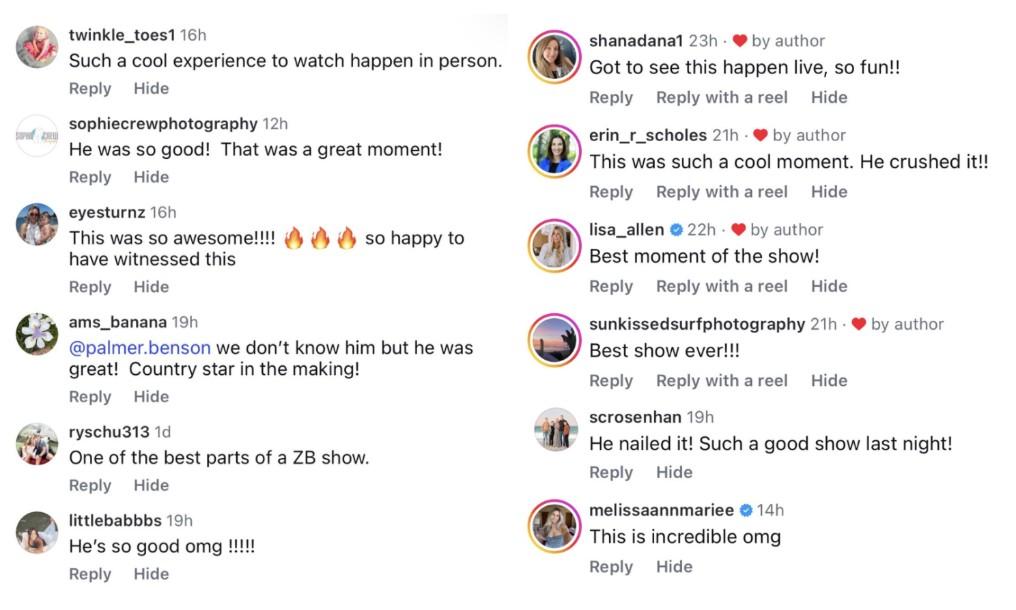
I posted the video on Instagram, assuming it would resonate with Zach Bryan fans. Within 24 hours it had been viewed more than 850,000 times. At first, I assumed people were reacting to Zach himself. Then I started reading the comments.
Almost every comment focused on the student.
"Best moment of the night."
"That kid absolutely crushed it."
"Country star in the making."
"I'm so glad I got to witness this."
The more I thought about it, the more I realized this wasn't just a great concert story. It was evidence of something much bigger.
The biggest moment of the night wasn't created by the performer. It was created by someone who, an hour earlier, had simply been another face in the crowd.
That feels significant because I don't think consumers experience the world the way they used to.
For most of history, there was a clear distinction between the people creating entertainment and the people consuming it. Athletes played. Musicians performed. Television personalities entertained. Everyone else watched. Our job was observation, and if an experience stayed with us for years afterward, we considered it a great one.
Then something changed.
The internet gave people access to information. Social media gave people a voice.
For the first time in history, billions of ordinary people weren't limited to consuming media. They could create it. We began posting photos, sharing opinions, uploading videos, documenting experiences, reviewing businesses, and building audiences around our interests. Some people accumulated millions of followers. Most of us didn't.
That isn't really the point.
The point is that an entire generation experienced what it feels like to create something that other people consume. Once you've been on that side of the relationship, your expectations inevitably change. You no longer show up hoping to simply watch something memorable. You hope something happens that allows you to become part of the story yourself.
I don't think we've fully appreciated how profound that shift has been.
Think about the way people move through almost any live experience today.
They're looking for the unexpected interaction they'll tell their friends about. They're hoping to capture the photo nobody else has or the video everyone wishes they had recorded. They're paying attention to the moments that feel personal because those are the stories they'll replay long after the event is over.
That's an entirely different mindset than consumers had twenty years ago.
The experience no longer ends when someone walks out of the venue. In many ways, that's when it begins. The stories get posted. The videos get shared. Friends comment. Group texts light up. New audiences experience the event through someone else's perspective.
The event continues creating value long after the lights go out.
That's a remarkable change if you're responsible for designing experiences.
The Savannah Bananas understand this better than almost anyone.
People often describe them as an entertainment company disguised as a baseball team, but I don't think that's what makes them remarkable. Their real advantage is that they consistently create moments people feel compelled to share because they make fans feel connected to what's happening around them.
Professional sports obviously operate under different constraints. Shohei Ohtani isn't going to stop during an at-bat and sing a Broadway number, nor should he. The competition itself has to remain the hero.
That doesn't mean participation disappears.
It simply has to be designed differently.
The first pitch. The military reunion. The proposal on the video-board. The child announcing "Play Ball." The fan featured on a dance cam that takes their moment to shine. None of those moments change the game itself, yet every one of them changes the experience for someone inside the stadium.
It's not just sports experiences. Bruno Mars is on tour and his opening DJ set is all about showcasing fans dancing on the video screens. I have yet to see a video of Bruno performing on my social feeds, but the fan cam videos continue to go viral.
I think many organizations unintentionally stop thinking once those moments happen.
In reality, that's where the opportunity begins.
The game presentation team creates the moment. The production crew captures it. The social media team distributes it. The featured fan shares it with friends and family. Those friends share it again. Someone sitting at home watches the video and thinks, I wish I had been there.
That's not simply content marketing.
It's demand generation.
The moment wasn't valuable because it happened.
It was valuable because people wanted to pass it along.
My Big Screen Breakdown of a fan taking her moment to shine on the big screen during a Bruno Mars concert.
Over the last seven years, our team at CUENTO Marketing (opens the CUENTO site in a new tab) has assessed experiences across professional sports, entertainment, hospitality, higher education, and enterprise organizations. Every project is different, but I've noticed one question becoming more important every year.
Where does the audience participate?
Not where they watch.
Not where they consume.
Where do they influence the experience? Where do they create a memory that belongs only to them? Where do they leave feeling like the experience couldn't have happened exactly the same way without them?
That question changes the conversation.
Instead of asking whether something was entertaining, we begin asking whether it created ownership.
Because that's what participation produces.
People don't simply remember experiences they helped create. They talk about them. They recommend them. They bring friends back to experience them. They become advocates because they feel connected to the outcome.
Observation creates memories.
Participation creates ambassadors.
For decades, organizations competed on products. As products became easier to replicate, they competed on service. More recently, they've competed on experiences, investing billions of dollars to create more immersive venues, better technology, and more memorable customer journeys.
I believe the next competitive advantage won't come from making experiences bigger.
It will come from making them more participatory.
The organizations that separate themselves over the next decade won't necessarily spend the most money. They'll be the ones that consistently create opportunities for customers to contribute, influence, and ultimately become part of the story themselves.
That's why I keep coming back to one simple idea.
Not because observation no longer matters.
Great games still matter. Great concerts still matter. Great performances always will.
But observation is no longer enough.
People don't just want to witness memorable moments.
They want to have one.
As I've continued thinking about this idea, I've started using a simple framework to evaluate experiences.
Before designing anything, ask three questions.
1. What will people watch?
This is the performance itself. The game. The concert. The keynote. The exhibit. The reason people showed up in the first place.
2. What will people do?
Where do they participate? Where do they influence the experience? Where do they become more than an observer?
3. What will people share?
When they leave, what story are they want excited to tell? What photo, video, conversation, or memory extends the experience beyond the venue and into everyone else's feed?
The first question creates customers.
The second creates memories.
The third creates growth.
Too many organizations spend nearly all of their time designing what people will watch.
The organizations that win tomorrow will be equally intentional about what people will do and what they'll be excited to share.
I don't think this principle applies only to sports.
I think it applies to hospitality, retail, healthcare, museums, education, conferences, and anywhere people gather to experience something together.
Social media didn't just change how we communicate.
It changed what we expect when we show up.
The organizations that recognize that shift won't simply create memorable experiences. They'll create experiences people proudly carry with them because those experiences become part of their story.
And when your customers become part of the story...
They become part of your marketing.
Experienced By Wayne: The Newsletter
Ideas, observations and lessons from the intersection of business, marketing, sports and experience. Delivered to your inbox.
Observation
BIG SCREEN BREAKDOWN: The Kansas City Royals ran an inflatable hot dog and bun race on the big screen.
Observation
I see a lot of in-game entertainment ideas.
Observation
In this episode of Ride With Me, I break down:
Observation
The Tartan Army completely changed the way I look at the World Cup.